

ITINERARY 3
Traces of faith and natural paradises
An enchanting itinerary that will show you the inland area of the Alto Ionio Cosentino, immersed in the nature of the Mount Sellaro and Mount Sparviere and the other evocative landscapes of the Pollino massif, an ideal destination for outdoor enthusiasts. Discover mysterious and mythological corners such as the Abisso del Bifurto or the Grotta delle Ninfe, spiritual places such as the Sanctuary of Santa Maria delle Armi and villages where the most ancient traditions still thrive, such as Paludi and Castroregio, vital centres of the Arbëreshe culture in Calabria
Map
Technical specifications of the route
7
Location
35
Travel distance
12
Points of interest
ITINERARY 3
Description of the itinerary and stages
The stages
Francavilla Marittima: the beauty of simplicity
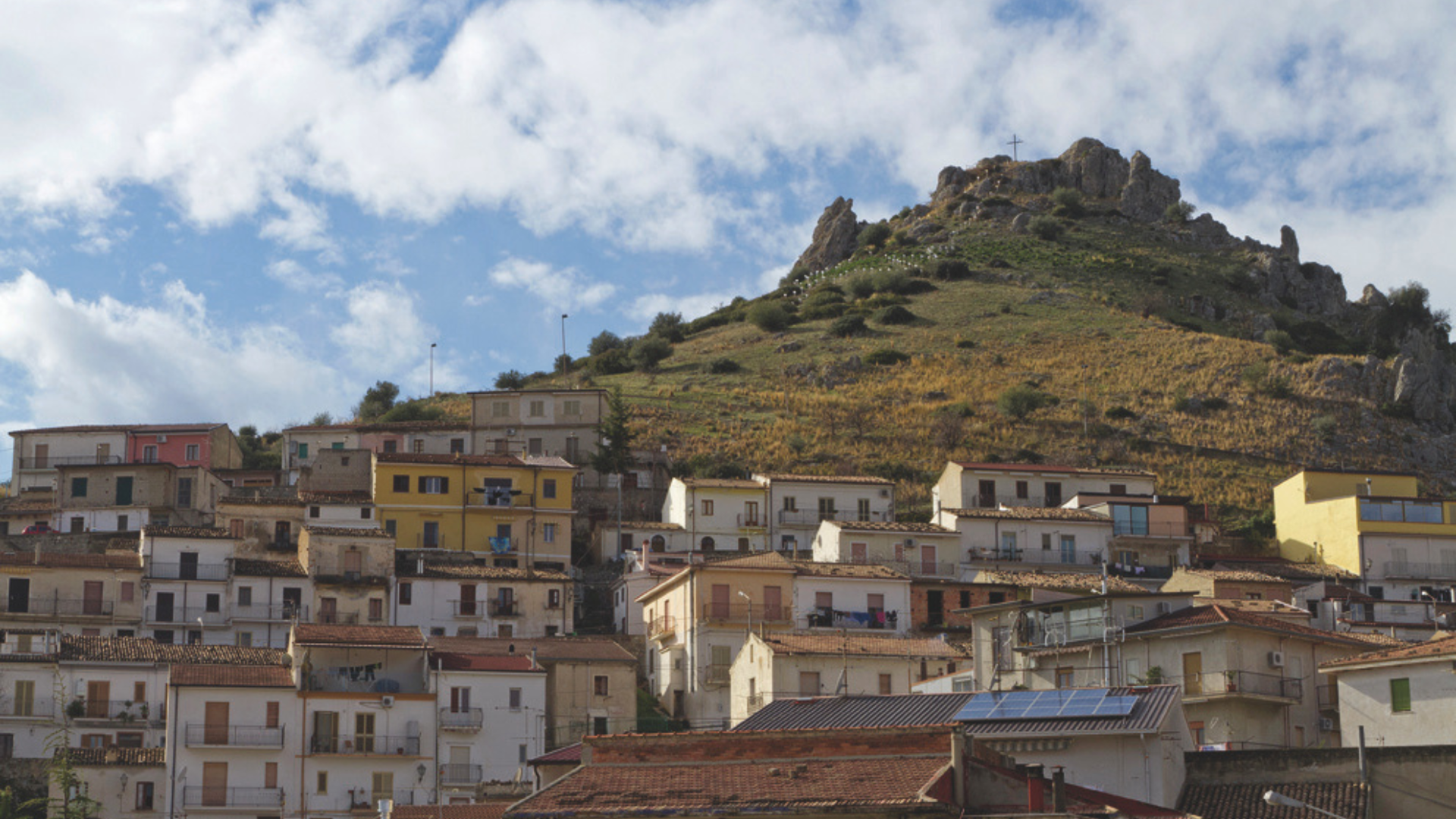
The gaze of those driving along the SS 92 highway, leaving the Ionian coast to head inland, soon perceives the change: those mountains that before appeared only a remote skyline, almost unreachable from the horizontal immensity of the Sibari plain, gradually become a concrete presence, made up of ascents and descents, undulations that, kilometre after kilometre, become more and more marked.
Even the Raganello torrent, which at first flows freely between the flat banks, at a certain point becomes constricted and regimented by natural backdrops, great earthy gullies, indeed impressive, but which are only the announcement of what, as we ascend towards the Pollino heights, will be revealed as one of the most spectacular canyons in southern Italy.
Surrounded by a bucolic landscape, dominated by the cultivation of centuries-old olive trees from which the precious Bruzio PDO extra virgin olive oil is produced, and there, nestled at the foot of a slope that becomes steeper and steeper until it becomes a rock face in the shadow of the Mount Sellaro, the small town of Francavilla.
Official geography attaches the adjective “Marittima” (Maritime) to its name, no doubt to emphasise its proximity to the coastline, but the atmosphere is decidedly that of the hillside. This is the preamble and announcement of the environment that will accompany us on our itinerary to discover nature and the traces of faith and history among the towns of the Sibaritide LAG.
Observing Francavilla from afar, even before arriving in the village, you get the impression of admiring a painting, a large nativity scene enclosed in an enchanting natural setting. This illusion becomes reality at Christmas time, when on the top, as well as on the Timpa del Castello (Castle Top), a luminous structure in the shape of a Christmas tree, forty metres wide and one hundred metres high, is lit.
Simplicity is the best word to describe this small agricultural centre of just over three thousand inhabitants. There is no sumptuous architecture to be found here, and the quiet elegance of the landscape offers no majestic views.
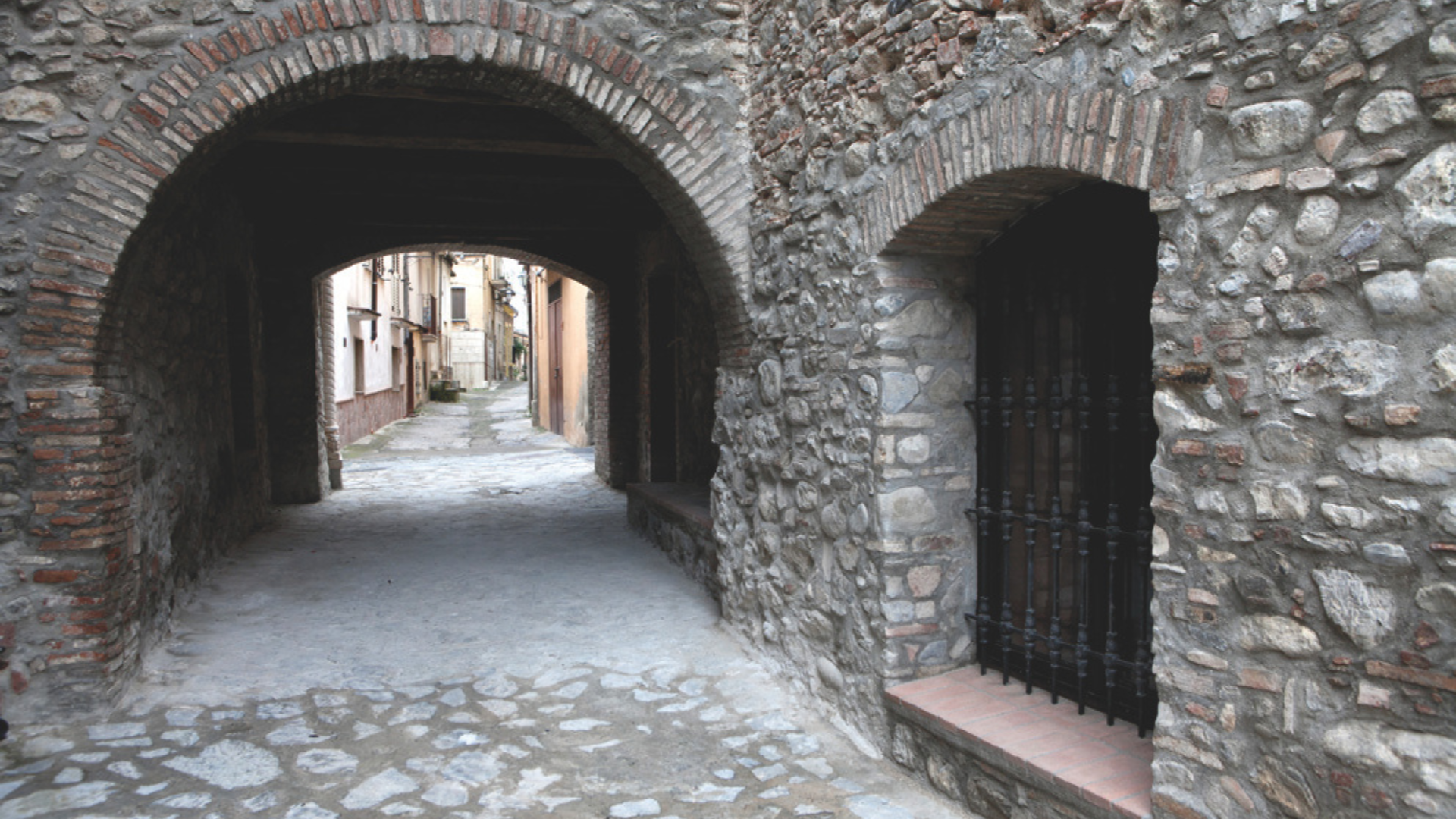
It is a beauty that offers nothing to the tourist spectacle, but which must be looked at with a curious and attentive gaze and sought in the everyday life of the people who live here, in the authenticity, in fact, of lives whose roots cling tightly to the local culture and identity, like the village houses cling to the rock on which they are founded and of which they are made.
So, the rural essentiality of the village’s small churches, such as that of the Beata Vergine degli Infermi (Blessed Virgin of the Sick), acquires charm and meaning when observed through the eyes of faith and devotion, and the practical wisdom of rural life becomes “art”, as suggested by the name of the museum housed in the premises of the former covered market.
In recent years, the municipal administration has invested heavily in promoting the area, focusing on outdoor tourism. In this context, an equipped area for camper vans has already been set up, offering services for a comfortable stay dedicated to itinerant tourists and nature lovers.
Beyond everyday life and history, then, there is legend. Even the epic. In fact, a couple of kilometres from Francavilla, at the top of a hill overlooking the Raganello river, is the Timpone Motta-Macchiabate Archaeological Park which, according to some historians, preserves the remains of the ancient polis of Lagaria founded, according to tradition, by none other than the mythical hero Epeo, builder of the Trojan horse. The Civic Archaeological Museum, housed in Palazzo De Santis, preserves the remains discovered during excavation campaigns in the archaeological area. The museum rooms also display scientific reproductions of some of the most emblematic artefacts found, currently housed in other museums. A unique opportunity to explore the history and archaeology of the area.
Cerchiara di Calabria: not by bread alone…
Once our visit to Francavilla is over, we follow the signs that lead us to Cerchiara, the second stage of our journey. Before reaching the village, driving along the SS 92 highway, we cannot fail to make a few stops to get to know some of the many attractions scattered across the municipal territory.
Let us begin with the ancient Palazzo della Piana, an imposing structure found a short distance from the highway and which, although in a state of partial abandonment, tells us much about local history and traditions. The palace, dating back to the 16th century, developed around an older watchtower and, over the centuries, became the centre of local economic and agricultural life, as can be seen by the large mills, millstones and ovens that can still be found in the inner courtyard. Later, the Pignatelli nobles started a real liquorice production industry here, an activity that flourished for years, to the point that a special railway track was built to serve the factory.
A few kilometres further on, another surprise awaits us, telling a story that takes us even further back in time. Here, from a rocky cavern that opens up at the foot of the first reliefs of the Pollino, a sulphurous spring gushes forth, known since antiquity for its curative qualities and known as the Grotta delle Ninfe (Cave of the Nymphs). The Greeks of the Sibaritide believed it to be the home of Calypso and the Lusiadi nymphs who cured all ills. Today, a thermal centre directly managed by the Municipality of Cerchiara stands near the cave.
Our destination is now almost in sight, but the route to reach it has not yet run out of surprises. The path of the highway now becomes steep and winding and, shortly after yet another bend, bypasses the narrow gorge at the bottom of which flows the Caldanello torrent, offering a breathtaking view, to say the least.
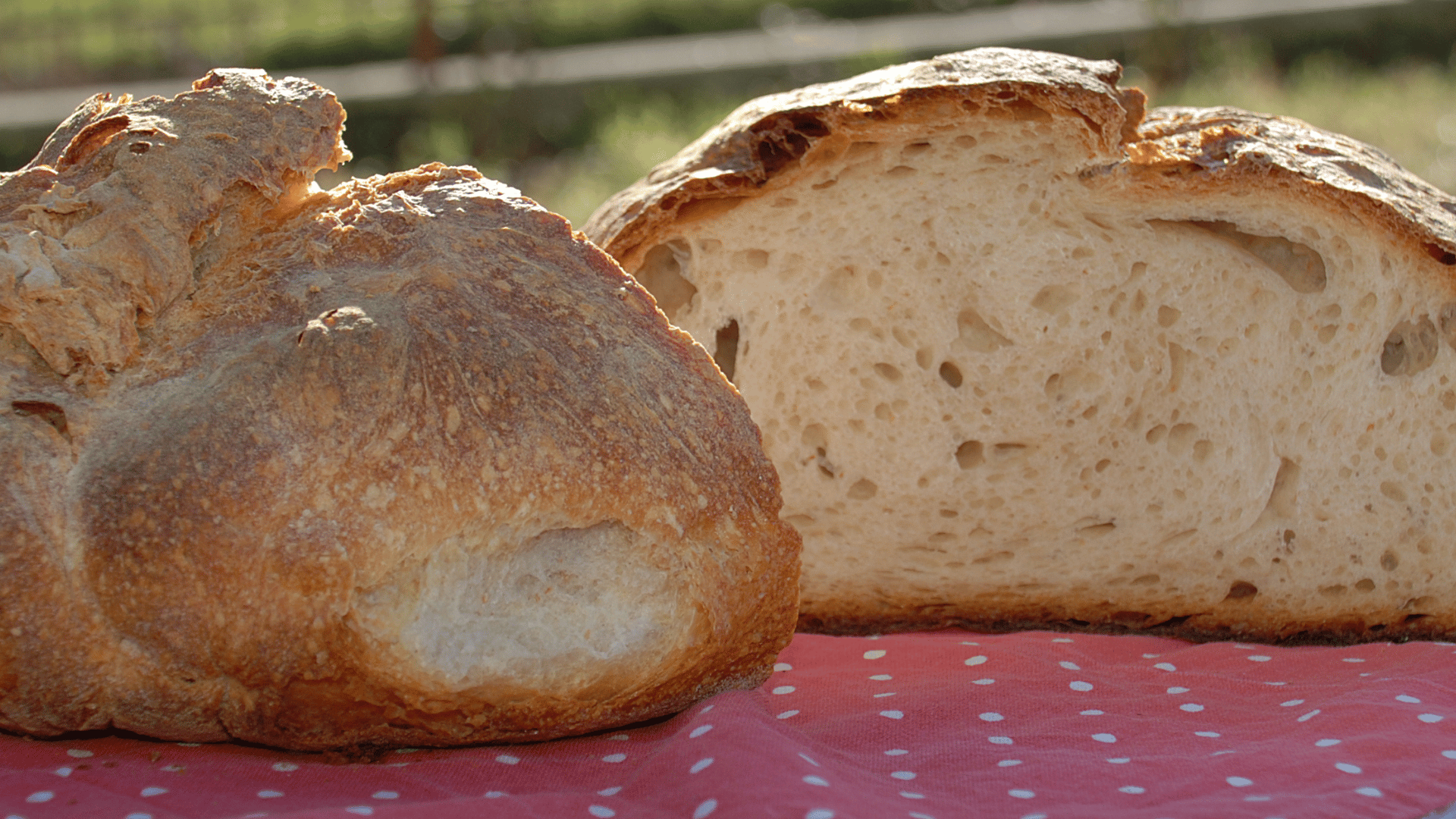
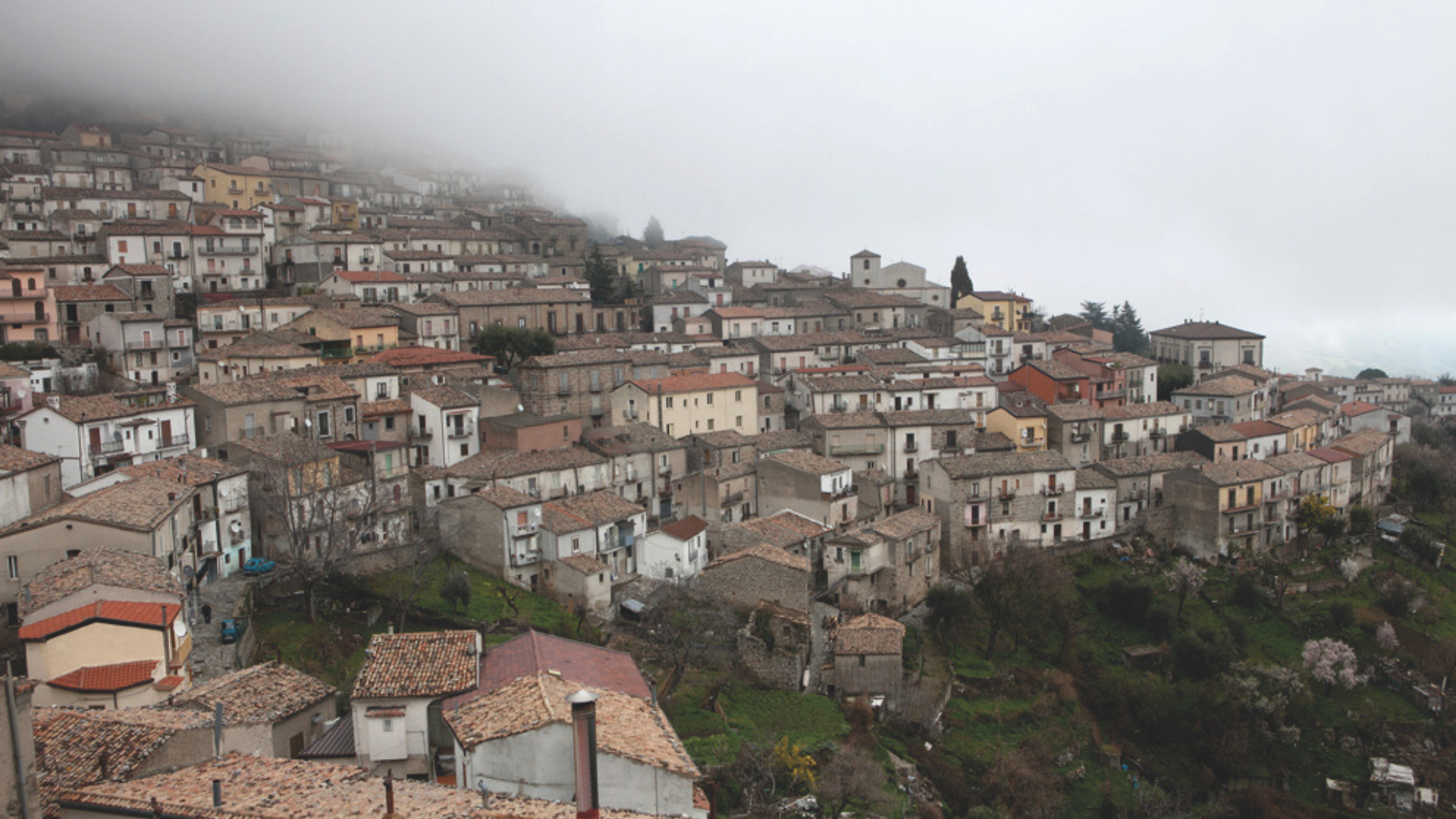
A few more hairpin bends and finally Cerchiara welcomes us, a pearl nestled on the slopes of the Mount Sellaro, with its narrow medieval alleyways, neighbourhoods with ancient names, stone-clad dwellings with loggias and external staircases… and with the unmistakable scent of its famous bread, a speciality recognised by the Denominazione Comunale di Origine (De.Co) and awarded at the Slow Food Salone del Gusto.
The municipality has dutifully dedicated a museum to this exquisite “colossus” of the white art (the loaves weigh between two and five kilograms), located in the old town centre in what used to be an old mill, as well as a “Gran Festa del Pane” (Great Bread Festival) that attracts many tourists, onlookers and gourmets every year.
Not far from the Bread Museum is one dedicated to the Heldreich’s pine, the symbolic arboreal species of the Pollino National Park. The territory is in fact almost entirely within the Park’s boundaries and hosts some of its most interesting natural wonders, which make Cerchiara a small paradise for outdoor enthusiasts.
On the slopes of the Mount Sellaro, a dense network of trails unfolds, ideal for hiking and mountain biking, while the many limestone cliffs in the surroundings are a popular destination for the lovers of climbing. The Caldanello gorges are a magnificent natural spectacle, and a short via ferrata has also been created in the canyon, reserved for expert hikers and properly equipped, which from the top of a hill overlooking the gorges descends to the riverbed, traverses the gorges and climbs up to an aerial ledge that diagonally crosses the rock face on the other side.
The caverns generated by the karstic soil, which were once the refuge of hermit monks and brigands, are today the terrain of exploration for speleologists, who find here some of the deepest caves in Italy, such as the Abisso del Bifurto, which descends 683 metres into the bowels of the earth.
In our itinerary dedicated to encountering nature and traces of faith in the Alto Ionio region, we cannot miss a visit to the Sanctuary of Santa Maria delle Armi located just over 7 kilometres from the town of Cerchiara. This is one of the oldest and most venerated places of worship in the area, the destination, on the 25th of April each year, of a devotional walk which, from the village, winds along the slopes of the Mount Sellaro. The sanctuary is also easily reached by car, but the best way to discover it is certainly to walk along the Sentiero dei fiori di Pentecoste (Path of the Pentecost Flowers, or of the Cessuta), recently enhanced by the Sibaritide LAG, which retraces the steps of the traditional procession.
San Lorenzo Bellizzi: nature as protagonist

It is now time to head towards the heart of the Pollino, following the winding SS 92 highway to San Lorenzo Bellizzi, a tiny village perched at 830 metres above sea level, before extraordinary landscapes such as the Timpa di San Lorenzo and the Timpa della Falconara, also destinations for hiking enthusiasts. Before exploring the natural beauty of this area, it is worth getting lost in the narrow streets of the village, with its traditional houses and many small churches and chapels. Of course, you cannot miss a taste of the traditional dishes and products, such as the much-appreciated locally produced cured ham.
The real marvel of the area, however, is its natural setting, an irresistible attraction for fans of hiking and the most diverse outdoor sports.
Internationally renowned are the gorges of the Raganello torrent, which has carved through the limestone here over the millennia, creating one of the most spectacular canyons in Italy.
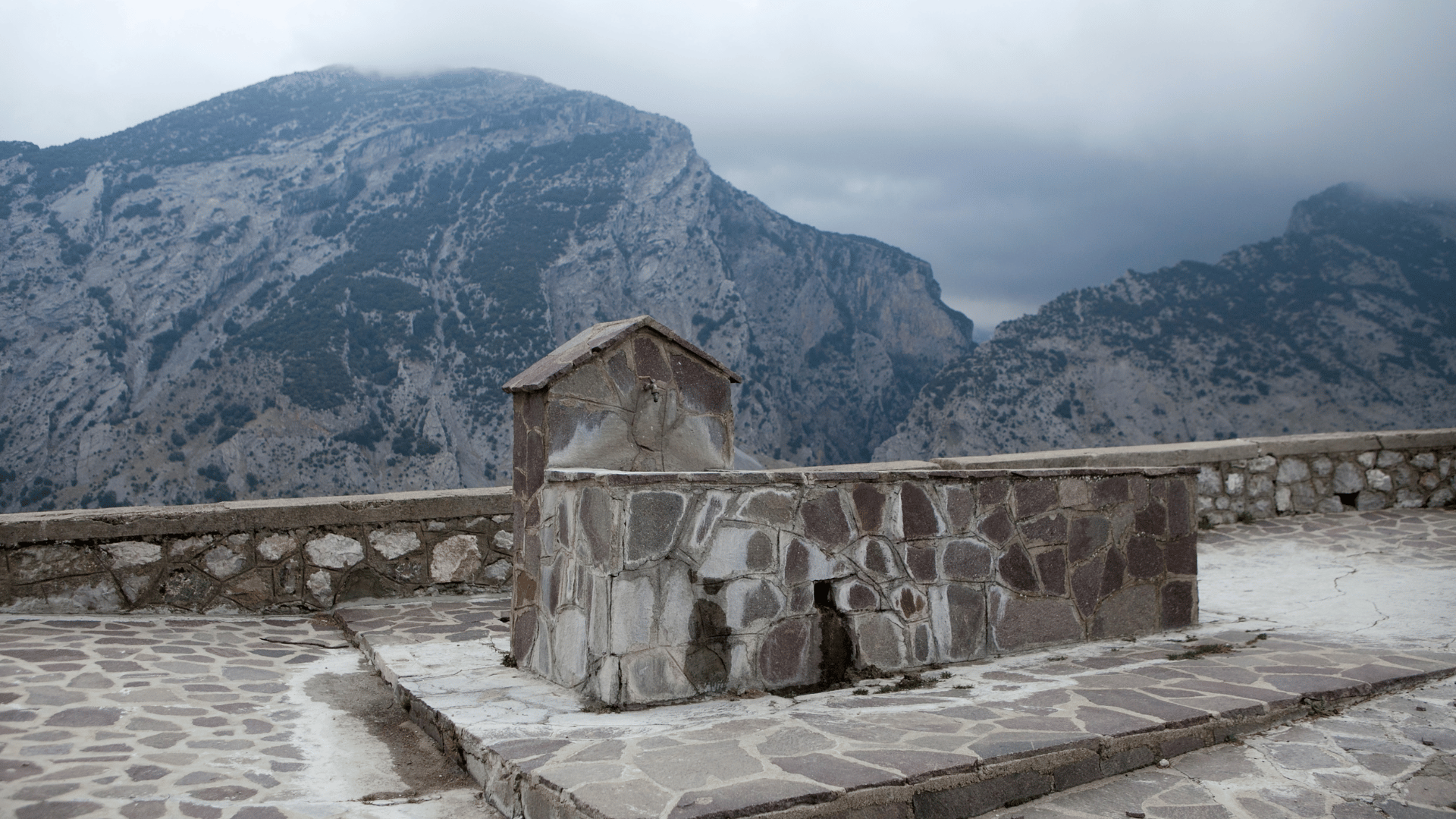
The “Gole del Raganello” (Raganello Gorge) Reserve, established in 1987, covers an area of 1,600 hectares. Today, it has been included within the perimeter of the Pollino National Park and is also a Special Protection Area (SPA), as well as a Site of Community Importance (SCI) due to the valuable flora, fauna and environments it preserves. The Raganello is approximately thirty-two kilometres long, thirteen of which consist of a deep and spectacular canyon with overhangs reaching hundreds of metres at some points. The watercourse, which rises at the foot of the Serra delle Ciavole, initially descends quietly through the woods until it reaches the Timpa di San Lorenzo, where an imposing gorge begins with smooth walls up to seven hundred metres high, small waterfalls, foaming waters and multicoloured rocks. Hikers and lovers of canyoning and rafting will find in the gorge one of the most spectacular routes in the whole of southern Italy.
Plataci: a dive into the arbëreshë culture

We leave San Lorenzo Bellizzi by driving back along the SS 92 highway, as far as the crossroads where, on the left, the road branches off below the wooded slopes of the Mount Sparviere and then descends with spectacular views along the ridge leading to Plataci.
Known as “The City of Fountains”, because of its pure waters that come from springs gushing out at an altitude of 930 metres, Plataci is above all one of the villages in the Ionian-Silan lands that most proudly and obstinately preserve the Arbëreshë culture.
This is evident from the very entrance to the town, thanks to the strictly bilingual road signs. It can be seen in the urban structure itself, which presents the polycentricity typical of ancient Albanian villages, organised in districts, each gathered around a central shared space. Then there are the murals that adorn the houses and evoke the history and traditions of the people who landed in Calabria in the 15th century, coming from the Balkan shore of the Adriatic Sea.
But it is above all in the religious worship of the Greek Orthodox rite that the community comes together to assert its identity. The beautiful 15th-century church of Saint John the Baptist, which preserves valuable works of art inside, is the fulcrum around which traditional festivals revolve, such as the one dedicated to the Virgin Mary of Constantinople and the Easter rites of passion, death and resurrection that are celebrated throughout the Holy Week. Very old is the ritual of “stealing water”: after midnight on Holy Saturday, the women go to a fountain outside the village, in strict silence. The men around them try to get them to talk, but only after they have reached the fountain and taken the water will it be possible to exchange good wishes by saying “Christòs Anesti”, meaning “Christ is risen”. The next morning, the sacristan will play the devil trying to prevent the priest from entering the church; the latter, after knocking several times, will enter singing songs and celebrating Easter Sunday. Particularly evocative is the festival of the Madonna del Monte (Our Lady of the Mount), held on the 21st of August, when the statue of the Virgin is carried in procession to the pretty chapel located in the Montagnola forest, a short distance from the village, while the women perform the traditional ndorcat, the candle dance, and the faithful make cash offerings, propitiatory for the wishes entrusted to the Virgin’s benevolence. More secular traditions also remain alive, such as the typical dance of the vallja, dedicated to the warrior hero George Castriota Skanderbeg, a popular dance where young people, dressed in traditional costumes, walk the streets of the village performing epic or auspicious songs. The Festival of the Little Arbëreshe Singers is also very popular.
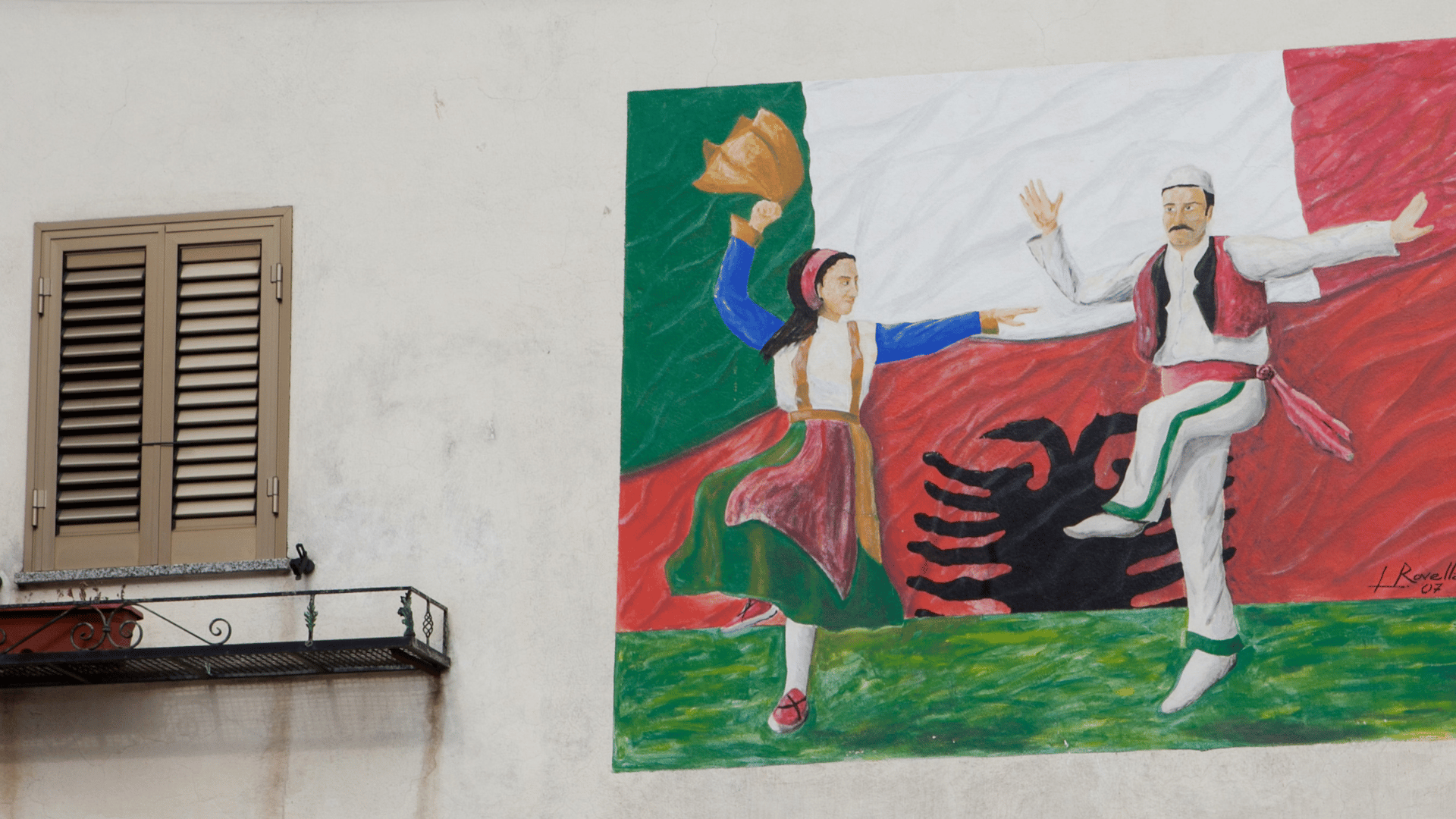
In these places, which have always been a melting pot of different peoples, the Arbëreshë have been able to preserve their originality, while integrating and participating in Italian culture and history with fundamental contributions. In fact, one of the most illustrious sons of these lands is Antonio Gramsci, who was born in Plataci and to whom the municipality has dedicated since 1997 the “Itinerari Gramsciani” (Gramsci Itineraries), a series of conferences and round tables centred on the themes dealt with in the great intellectual’s works.
For those who love open-air life, Plataci also offers a rich network of trails and picnic areas in the green woods that cover the territory, as well as the opportunity to enjoy the acrobatic routes of Plataciland, the adventure park next to the town centre.
Finally, gourmets, in addition to savouring the many typical dishes of Arbëreshe cuisine, should not fail to take along, as refreshment for the next stages of the journey, one of the tasty braids of dried figs typical of the town.
Villapiana: scent of the sea
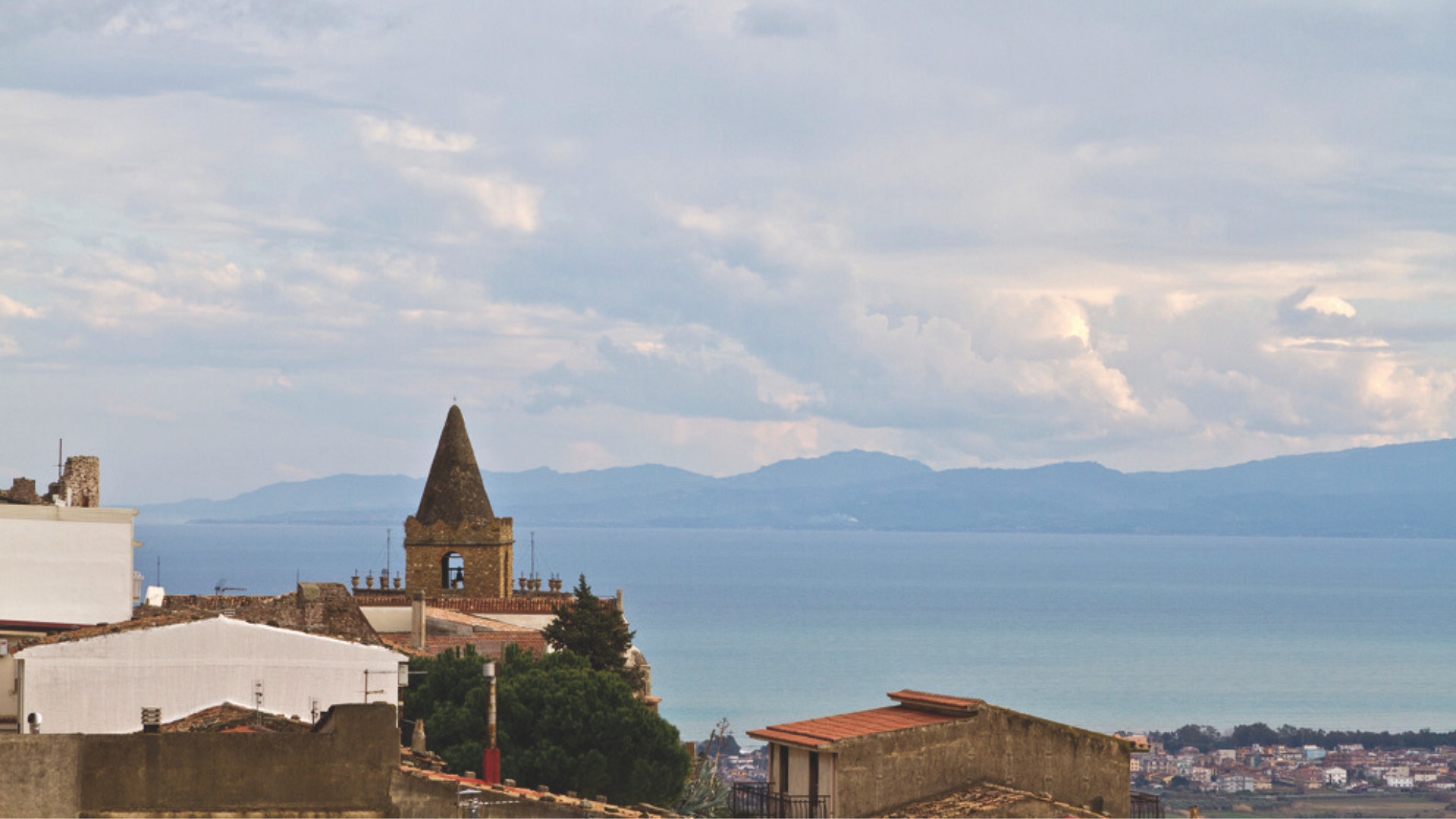
Leaving Plataci along the SP 159 provincial highway, the views of the harsh Pollino mountains gradually give way again to the hilly environment. The sea can be seen on the horizon, felt in the air and perceived in the weather and in the change of vegetation. Kilometre after kilometre, descending in altitude, the olive trees become the undisputed rulers of the landscape.
On the last hills before the Sibari plain and the coast, between the courses of the Satanasso and Saraceno torrents, we come to the village of Villapiana, with its very ancient history. In fact, it was founded as a colony of Magna Graecia with the name of Leutermia, which it retained until the 9th century, when it was destroyed by Saracen raids before resurging and prospering under Longobard and Norman domination and taking on its typical medieval village appearance in the following centuries.
Wandering through the streets of the town, suggestive views are revealed as well as monuments of considerable interest, such as the church of Santa Maria del Piano, built between the 13th and 14th centuries, which preserves several valuable works, including the wooden statue of the Virgin Mary, here called Santa Maria del Piano, a 14th-century stone baptistery and two wooden paintings depicting the Sangue di Cristo con Resurrezione e Profeti (Blood of Christ with Resurrection and Prophets) from the 16th century.

The sea and the beautiful Ionian beaches are calling us. We then leave the village and follow the SP 159 provincial highway in the direction of Villapiana Scalo. First, however, with a little initiative and spirit of adventure, we can detour by following one of the secondary roads that lead to the immense expanse of pebbles and limestone boulders of the Satanasso torrent. The month of June is the ideal time to make this little excursion and admire the bed of the torrent transformed into a lilac stream, formed by the myriads of oleanders interspersed with the pale green of the Aleppo pines.
Having reached the coast, our route heads north along the SP 253 provincial highway. But we should not be too eager to continue. Now is the time to indulge in a few hours of relaxation in the lively hamlets of Villapiana Scalo and Villapiana Lido, or to enjoy the pleasure of a sea-view stroll along the enchanting footpath that runs between the pine forest and the beach, where sea daffodils bloom in summer.
Trebisacce: the balcony on the Alto Ionio region
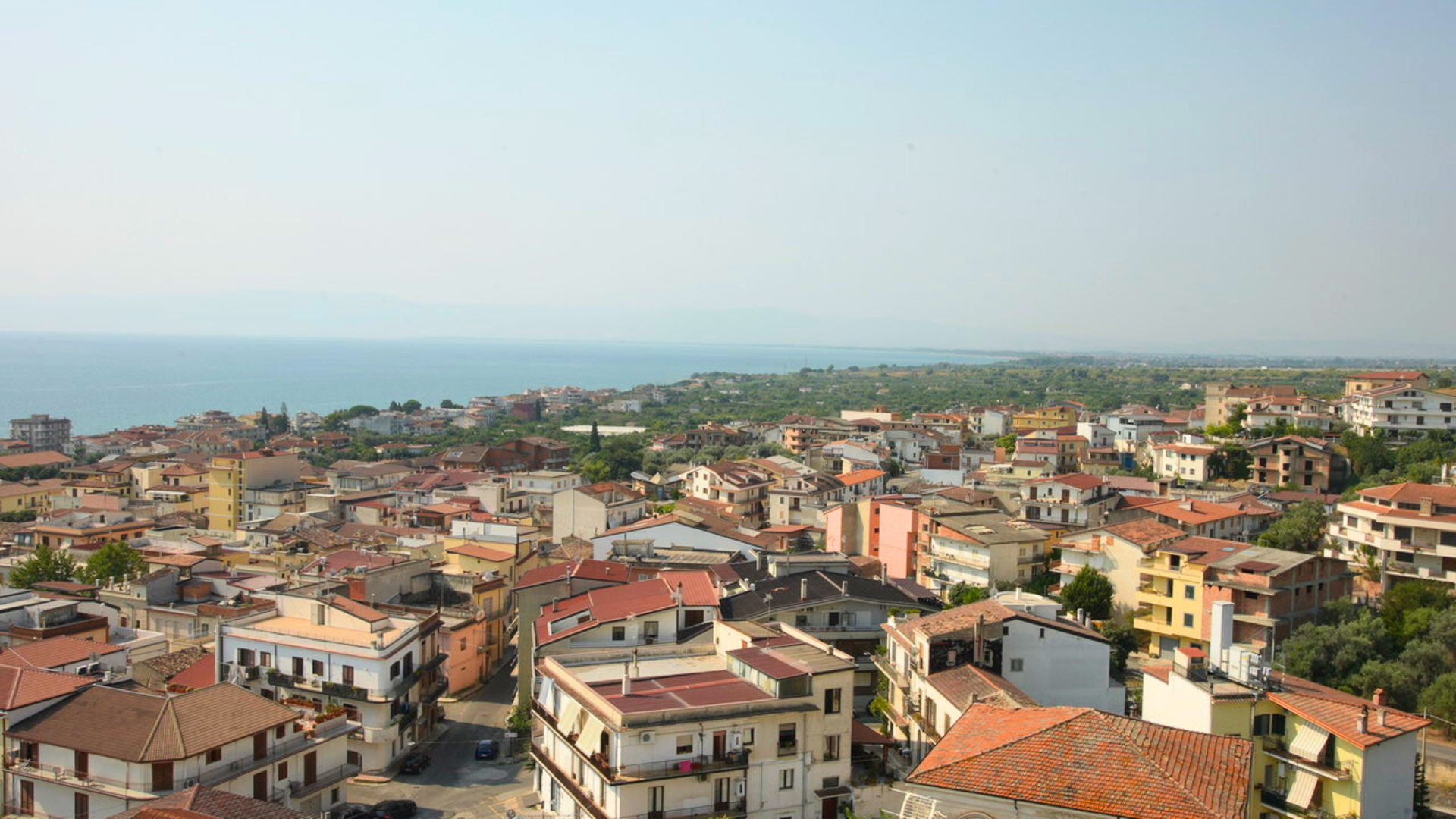
We leave Villapiana and its seaside hamlets and continue along SP 253 provincial highway. After having passed and approached the Torre del Saraceno (Saracen Tower), one of the many watchtowers built over the centuries along the Ionian coast, we arrive in the municipality of Trebisacce, which welcomes us with the spectacle offered by one of its best-known typical products. Immediately after passing the mouth of the Saraceno torrent, the colourful “i Vigne” gardens appear on our left, where the prized Arancio Biondo Tardivo is cultivated, a variety of orange typical of this area, protected by the PAT (Prodotto Agroalimentare Tradizionale – Traditional Food Product) mark, which gives fruit with a unique and unmistakable flavour reaching full ripeness in April.
These gardens are not only a symbol of the local agricultural tradition, but also an ideal area for those who love to dive into nature. Wandering through the labyrinth of narrow streets of “i Vigne” gardens is a real feast for the eyes, captured by the emerald green of the citrus leaves and the orange of its fruit, colours that blend with the blue of the sky and the sea on the horizon.
The historic centre of Trebisacce watches over the coast from the top of its high ground right next to the sea and protected by the imposing Bastione (Bastion), a real balcony overlooking the Ionian Sea.
The Mother Church of Saint Nicholas of Myra, an architectural jewel dating back to the 11th century, is worth a visit. The dome and the bell tower, in typical Byzantine style, recall the time when the Orthodox cult was widespread throughout the Alto Ionio region. The interior preserves valuable works of art such as the 18th-century altarpiece depicting the Holy Trinity. A major restoration in 1994 brought to light a charming wooden Crucifix, which now dominates the high altar, and a 16th-century statue of Saint Anthony Abbot.

Evidence of Trebisacce’s bond with its history and traditions is the Museo dell’Arte Olearia e della Cultura Contadina (Museum of Olive Oil Art and Peasant Culture) “Ludovico Noia”, located not far from the Mother Church and in the heart of the historic centre. The exhibition, set up in the premises of an old oil mill, celebrates what, together with oranges, is the territory’s most precious agri-food product. In fact, the culture of oil is deeply rooted here too, and around it and the cultivation of oranges has revolved the economy and life of the local populations.
History and culture enthusiasts should not miss a guided tour of the Archaeological Park of Broglio di Trebisacce. The protohistoric village of Broglio, inhabited for about a thousand years by the Oenotrian people, is considered one of the earliest in Italy.
Another unmissable stop is the promenade, beaches and pier of Trebisacce. With its almost five kilometres, the promenade is the perfect place for relaxing walks and for those who love running, cycling and keeping fit, thanks also to the equipped outdoor fitness stations. The pier, on the other hand, is a true walkway over the sea and, following its latest restyling, has now become the main attraction of Trebisacce’s promenade.
Awarded the Blue Flag for several years, Trebisacce is renowned for its crystal-clear waters and smooth pebble seabed. There are numerous well-equipped beaches with facilities offering all the necessary comforts, but along the coast there are also wilder stretches where the landscape remains unspoilt and peace reigns supreme.
As in many other towns in the Ionian-Silan lands, strong traditional religious sentiment is manifested here through various celebrations and events throughout the year. One of the most heartfelt is the Festival of Saint Roch, held on the 16th of August, with events taking place throughout the day, during which the statue of the saint is carried on a small traditional wooden fishing boat accompanied by a carousel of vessels that surrounds it all the way out to sea. Equally popular is the Festival of Saint Leonard, the town’s patron saint, with the traditional procession through the alleys and a local craft fair. Another important religious event is the Procession of Saint Joseph, celebrated on the 19th of March, during which a hike to the hill where the chapel is located, not far from the historical centre, is traditionally organised.
In addition to religious and traditional festivities, Trebisacce is animated by a variety of events and festivals celebrating local culture and traditions. Various events take place throughout the year, such as the Festa del Biondo (Biondo Orange Festival), the Notte Blu (Blue Night), the Notte Bianca (White Night) and the historical Festa del Mare (Sea Festival).
Albidona: a village reviving age-old traditions

The route to discover the signs of faith and nature in the lands of the Alto Ionio region now takes us back to the Pollino mountains. Before taking the SP 153 provincial highway, climbing the scenic ridge between the Pagliara and Avena torrents, we pause again along the coast to visit the Albidona watchtower (among the best preserved in the area) near which is located the homonymous library. It is a precious treasure chest of culture, containing seven thousand volumes dedicated to the most diverse topics, from fiction to economics and politics, as well as a large collection of texts related to the territory, with novels by well-known and lesser-known writers from Calabria and works on local geography, traditions, dialects and linguistic minorities.
We then follow the scenic route of the SP 153 provincial highway towards the village of Albidona. Before reaching the town, it is worth making a diversion along the small road that descends into the wild and spectacular Avena valley, to reach the small chapel of the Madonna del Cafaro. Completely restored during the 19th century, this small church probably dates back to the year 1000, built by Basilian monks, and preserves the terracotta statue of the legendary Madonna Assunta del Cafaro, widely venerated in the area and the subject of many beliefs. On the 15th of August each year, the locality is crowded with inhabitants who flock to celebrate her.

Among the villages of the Alto Ionio region, Albidona is one of those boasting the oldest origins. Here too, legends attribute the foundation to the heroes of the Trojan War.
Traces of this multi-millennial history surface in the town’s religious devotional events, which combine Christian rites with traditions of probable pagan origin. This is the case of the double festivity of Saint Francis of Paola and Saint Michael the Archangel (7th and 8th of May), when the young people of Albidona carry the pioche, huge trunks of Aleppo pine, along the picturesque streets of the old town centre. The following day, women, in traditional costume, carry the cinti, containers for agricultural measures decorated with floral tributes or candles, and the traditional incanto, an auction of typical products, animals or artistic artefacts dedicated to the saint, takes place in the centre of the village. Finally, in the night, the majestic pioche are set on fire, all accompanied by the music of popular instruments and the authentic flavours of local products, such as the highly appreciated raw salami.
Alessandria del Carretto: back to the mountains
After the due visit to Albidona, our itinerary continues along the SP153 provincial highway towards Alessandria del Carretto.
The route soon turns into a dive into the most unspoilt nature. It almost seems as if we are travelling back in time, to eras before the appearance of humans… and it is almost with surprise that we see the houses of Alessandria appear, perched at 1,000 metres above sea level, at the foot of the Mount Sparviere, with their exterior walls often decorated with colourful murals depicting the village’s main festivities, both religious and pagan. The most spectacular one is certainly the one dedicated to the traditional mask, the Polëcënellë Biëll, painted on a wall measuring around 80 square metres.
We are once again in the territory of the Pollino National Park and here Nature (with the capital “N”!) shows itself in all its beauty and power. It is no coincidence that our first meeting in the village is with the Museo del Lupo (Wolf Museum), dedicated to one of the ultimate symbols of wilderness. Upstream of the village, on the other hand, is the Orto Botanico della Difisella (Difisella Botanical Garden), a two-hectare green area criss-crossed by paths that allow visitors to admire monumental trees and experience the plant biodiversity of the Pollino area.
Alexandria’s very strong bond with the landscape in which it is set is also revealed in one of its most deeply rooted traditions: the Festa della Pita (Pita Festival). On the last Sunday in April, on the day dedicated to the patron saint of the town Saint Alexander, the inhabitants of the town meet to carry a large fir tree by force of arms along the paths, which is then hoisted into the San Vincenzo square. Here, on the 3rd of May, after the solemn mass, the procession and the incanto, the long-awaited Pita climb begins: it is a celebration marked by thunderous applause, inciting music and shouts, which support the young protagonists engaged in the climb, until the final jubilation dedicated to the hero who reaches the top of the tree.

Alexandria’s social life is also enlivened by the carnival celebration, a particularly eagerly awaited and special event here, linked to the ancient tradition of masks, of which the Alexandrians are particularly proud. There are two main traditional masks: ‘u polëcënellë biellë and ‘u polëcënellë brutte, both characterised by typical clothing and accessories and celebrated with great fanfare as they pass through the streets of the town. Alessandria’s is the only anthropological carnival in Calabria and one of the few in Italy. A historical event that has been held every year for more than four centuries and which, with each edition, brings thousands of people to the small village.
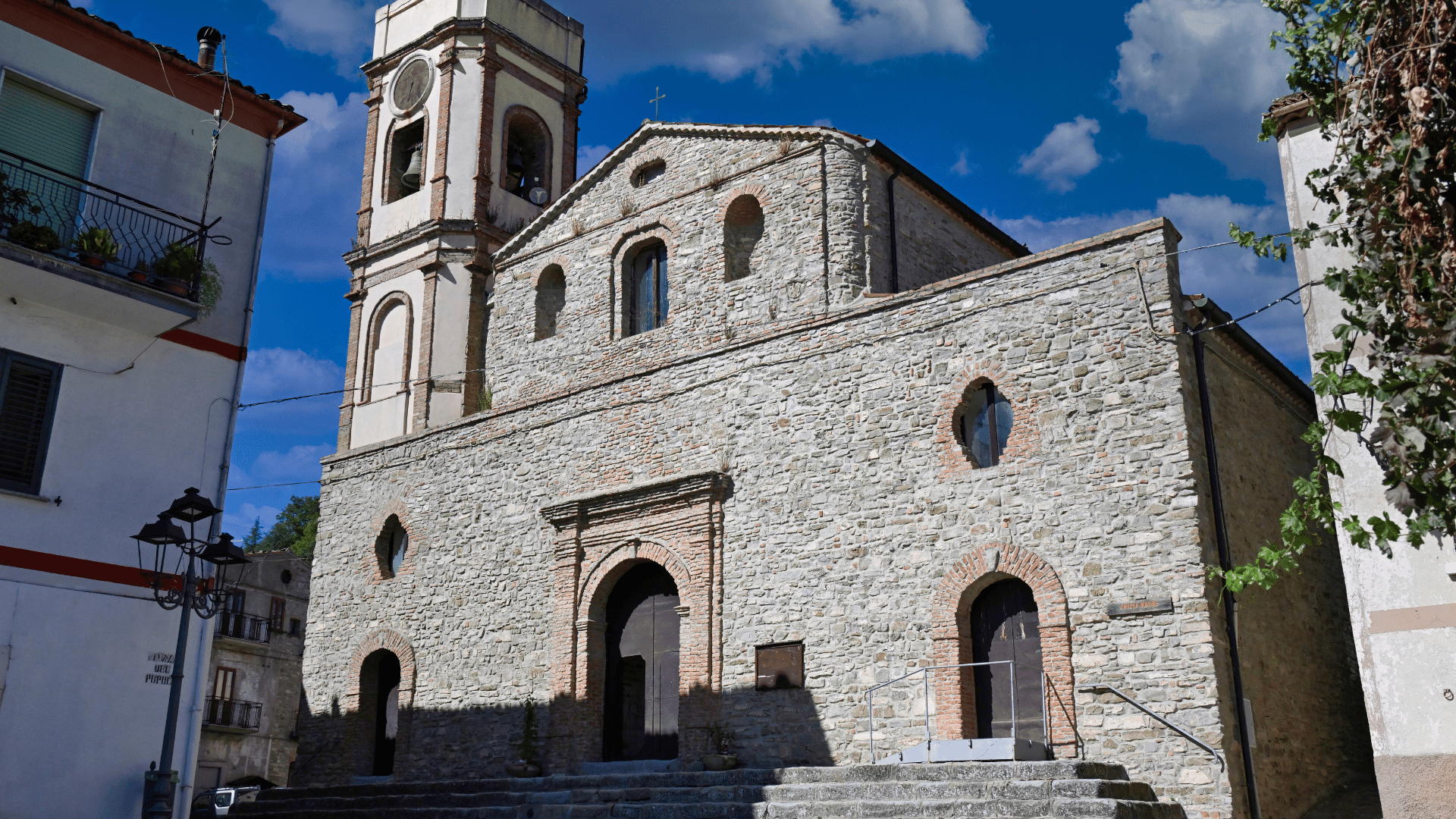
Another town pride is the mother church of Sant’Alessandro Papa Martire (Saint Alexander the Martyr Pope), a unique example in the historical-artistic heritage of the Alto Ionio Cosentino. Built in 1633 and restored several times, the church has a simple façade in local stone and a masonry bell tower with a Roman numeral clock; the interior, with three naves and a ribbed ceiling, preserves a 17th-century painting depicting Saint John the Baptist between Saint Anthony and Saint Catherine of Alexandria, precious reliquaries and a beautiful crucifix.
Let us, however, return to nature. You cannot say that you have really got to know the area of Alexandria without having made at least one excursion through its immense woods and mountains. There are many well-marked and carefully maintained tracks. Our advice is to set out along the Sentiero della Ghiacciaia (Glacier Path), enhanced by an initiative of the Sibaritide LAG, which, from the centre of the town, leads as a first stop to the Timpone della Neviera, then continues towards the Serra di Lagoforano and finally reaches the summit of the Mount Sparviere, at 1713 metres above sea level.
The last two must-see gems, before moving on to the last destination of our journey along the traces of faith and the paradises of nature, are the Museo della cardiochirurgia (Museum of Cardiac Surgery), dedicated to the eminent figure of Guido Chidichimo, who was born in Alessandria itself, and the Museo delle Maschere Antropologiche Italiane (Museum of Italian Anthropological Masks), also located in the premises of Palazzo Chidichimo, in the old town centre.
Castroregio: the flavour of tradition
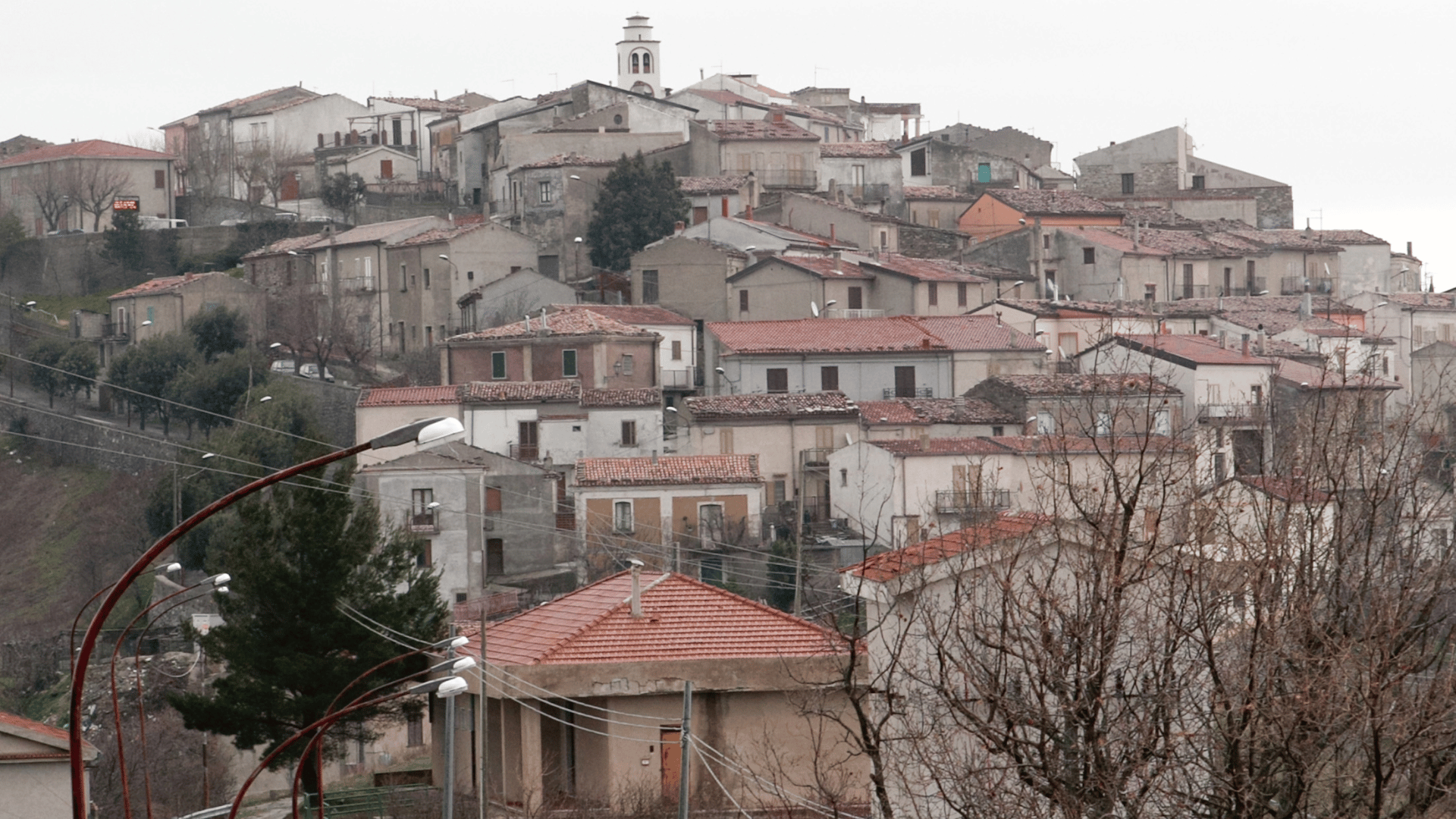
Leaving Alessandria, the route continues along the spectacular Pollino mountains. Following the SP 153 provincial highway, we head towards the small and delightful village of Farneta, a hamlet of the municipality of Castroregio. Farneta is a community of about a hundred inhabitants of Arbëreshë origin that maintains intact Albanian customs and language, handed down from generation to generation. Popular traditions are mainly centred around music and popular rituals, witnessed in particular in the festival of Saint Donatus, to whom the village church is dedicated. At the end of the visit, we drive back along the SP 153 provincial highway until we reach the junction with the SP 154 provincial highway, which we finally take in the direction of Castroregio.
Before reaching the village, perched on a hilltop like a real eagle’s nest, we cross the spectacular Bosco Foresta, one of the most beautiful and best-preserved monumental forests in southern Italy. Here you can wander at will, losing yourself in contemplation of this green ocean, where majestic specimens of turkey oaks and centuries-old chestnut trees stand out. The ideal stopping point is the chapel of the Madonna della Neve (Virgin of the Snow). The surrounding nature is of unique beauty, characterised by large boulders scattered among the grass, which seem to have fallen from the sky. The forest all around is equipped with picnic areas and tennis courts and is rich in vegetation, turkey oaks and elm trees, with a charming little lake formed by the winter rains. The old chapel features a beautiful façade in local stone with a red brick tympanum. The church houses the precious statues of the Virgin of the Snow with Child and of the Virgin of the Rosary.
After this last stop, we finally reach Castroregio, the final destination of our route. The village, also of Albanian origin, retains the characteristic stone buildings and narrow alleys that can only be travelled on foot.
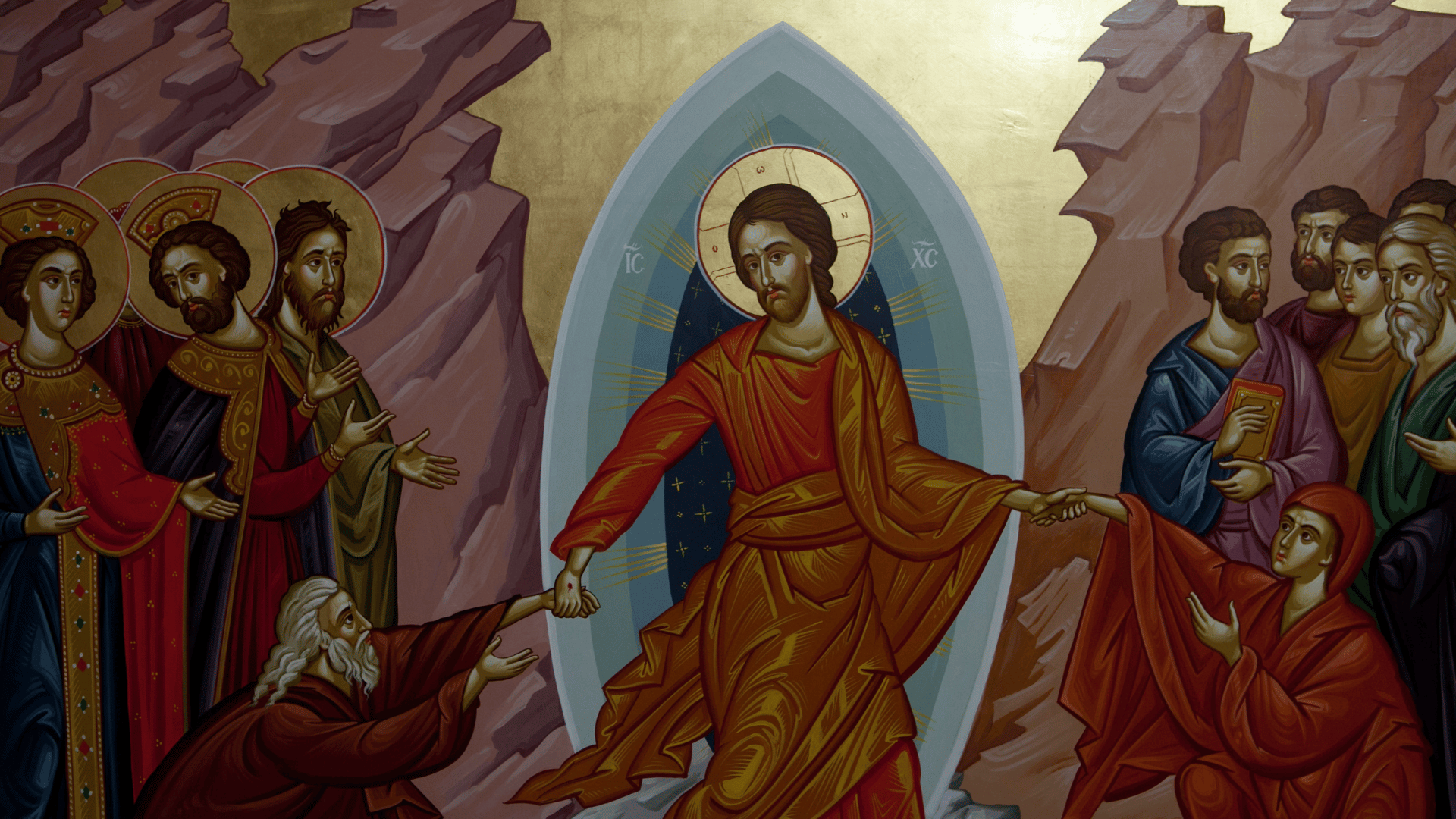
If you are lucky, you may happen upon one of those special moments when the community comes together to proudly re-enact its ancient traditions. Byzantine rite weddings are certainly one of these occasions. Celebrated amidst oriental-style choirs and chants and characterised by the bright colours of the women’s wedding dresses, weddings in Castroregio are, even today, an important gathering factor for the Arbëreshë ethnic minorities. While the women are in the bride’s house helping her dress, gunshots announce the arrival of the groom. The bride’s father turns to his future son-in-law and with a handkerchief in his hand asks: “Ti skamandilin do o nusen?” (Do you want the handkerchief or the bride?). He replies: “U dua nusen” (I want the bride). After receiving a blessing from parents and friends, the bride and groom, accompanied by the congregation, go to church. The ceremony consists of two separate rites, the ring ceremony and the coronation ceremony; the two drink wine from the same glass, which is then broken immediately afterwards, and finally, together with the witnesses, they make a triple round of the table where the Gospel is placed.
Discover the points of interest
Francavilla Marittima: the beauty of simplicity
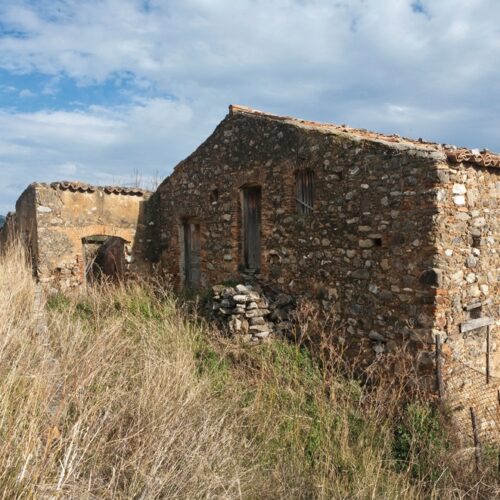
Here ancient local traditions, habits and personal relationships can be relived, embodied in the tools of everyday life in the past. We begin in the farmer’s house, with the display of a simple kitchen and bedroom. The furniture is poor, the bare essentials: a table, stuffed chairs, a sideboard with a few objects inside, and a simple bed made of wooden planks. We then move on to the tools of handicraft manufacture: the shoemaker’s, blacksmith’s and shepherd’s utensils, as well as agricultural equipment, mainly made of wood but with some exceptions in metal. At the end of the tour, the final section is dedicated to the modern creations of contemporary artists. The Museum of Peasant Art is located in the city-owned former covered market.
Info and contact details:
Municipality of Francavilla Marittima – www.comune.francavillamarittima.cs.it
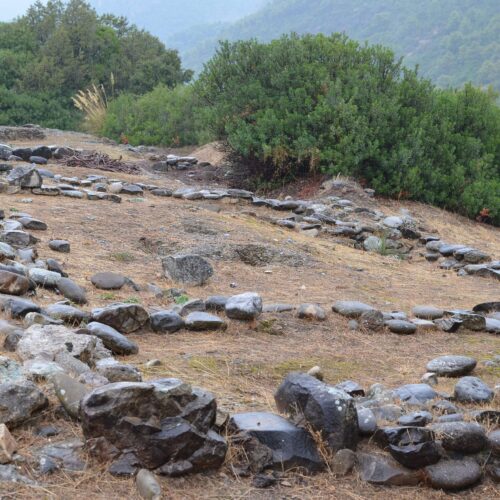
On the Timpone della Motta, in the municipality of Francavilla Marittima, is one of the most significant archaeological sites of the Alto Ionio Cosentino. Here, the Greeks built a sanctuary dedicated to the goddess Athena; this was probably the site of ancient Lagaria, one of the twenty-five polis of the sybaritic state. It was an important centre, as evidenced by the Macchiabate Necropolis, discovered and brought to light in the 1960s, with its two hundred tombs complete with grave goods, ceramic vessels and metal objects, usually made of bronze. It is assumed that the necropolis lasted three centuries, from the beginning of the 8th century B.C. until the end of the 6th century B.C. Currently, at the Archaeological Park, it is possible to visit the reproduction of the Trojan Horse, a legendary war machine used to conquer the mythical city of Troy. This reproduction is an impressive and unique structure that offers visitors the chance to immerse themselves in an iconic episode of the Greek mythology.
Info and contact details:
Municipality of Francavilla Marittima – www.comune.francavillamarittima.cs.it
Cerchiara di Calabria: not by bread alone…

Cerchiara is the City of Bread, constantly fighting against time and the pressing modernity not to allow the future to swallow up the most beautiful and genuine things of the past. This is why the municipality has created the Museo del Pane e della Civiltà Contadina (Museum of Bread and Farming Civilisation) in an old mill dating back to the 19th century, right in the centre of the medieval town. Inside the museum you can find representations with ancient tools, old millstones, photographs and life-size figures of how peasant life and work in the bakery used to be, from the moment the wheat was threshed and taken to the mill to its transformation into bread. There are beautiful two-by-three-metre acrylic paintings that bring the rural scenes of the past to life on the walls. In addition, thanks to the projection room, it is possible to watch documentaries that take the visitor literally inside life in the bakery, almost to the point of having the impression of seeing your shoes soiled with flour. On display are several loaves of bread that tell of the variations in production, highlighting the typical Cerchiara loaf. Once you have left the museum, the only thing you can and should do is slip into an oven and taste it.
Info and contact details:
www.beniculturali.it/luogo/museo-del-pane-di-cerchiara-di-calabria
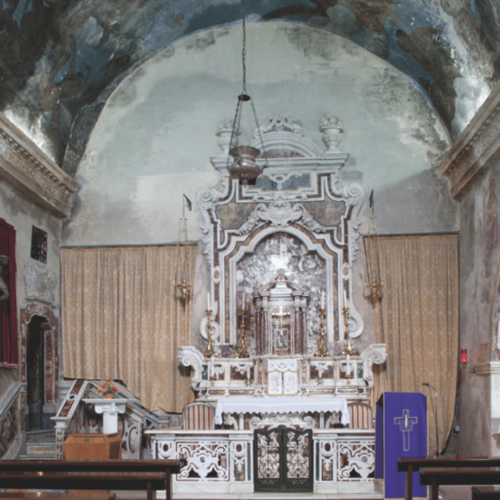
A place of prayer and meditation, a destination for saints and pilgrims for centuries, the majestic complex nestled in the rock of the Mount Sellaro leaves the visitor speechless for its magnificence and the enchanting scenery in which it is set.
It was here that Saint Pancomio erected the monastery of Sant’Andrea in the 10th century, gathering around him the hermits who formed the “Tòn Armòn” hermitage (from the Greek “Twn armwn” meaning “of the caves”) and instituted the cult of the Madonna Tòn Armòn, later translated by assonance into Madonna delle Armi. With the arrival of the Normans, the religious policy clearly opposed to Greek monasticism led to the decline of the original settlement, which was, however, never completely abandoned. Over the following centuries it was restored and enlarged, mainly by the Sanseverino princes of Bisignano and the Pignatelli princes of Cerchiara, until it reached its present structure. Arriving at the entrance, after passing the Palazzo del Duca (Duke’s Palace), the Ospizio dei Pellegrini (Pilgrims’ Hospice) and the buildings formerly used to house orphans and staff, we come to a small portico with four Romanesque arches, a splendid panoramic balcony over the Sibari plain below. Passing through a rich portal made of local white stone, we enter the interior of the church, carved a few metres into the living rock; it is Byzantine in style, with an irregular Latin cross plan, preserving notable 17th-century works and 18th-century frescoes of the Neapolitan school. The natural vault is frescoed with the “Gloria della Vergine con Trinità e Santi” (Glory of the Virgin with Trinity and Saints) and the “Giudizio Universale” (Last Judgement) by Joseph De Rosa of Castrovillari (1715). On the right side of the high altar, we discover the famous grotto housing the miraculous image of the “Madonna achiropita” (not painted by human hand), preserved since 1750 in a Baroque silver reliquary.
Info and contact details:
Municipality of Cerchiara – www.comune.cerchiara.cs.it
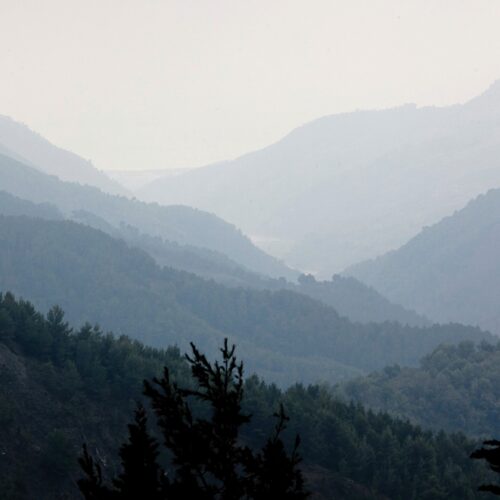
This is an elevated path that winds through the peonies and runs in the shade of large oaks and turkey oaks. We could definitely call it “the path among the peregrine peonies”. In fact, in the first half of May, the forest first turns a deep green and then, as the flowers bloom, a purple-red colour that stains the entire slope. Here we find various types of oak (turkey oaks, holm oaks, English oaks, downy oaks, hollies) interspersed with different types of pine, especially in the upper part. The mid-slope and slope environment shows how the track is sheltered from the great westerly cold thanks to massive blocks of rock in landslides thrown by immense forces like dice over a large surface. It is enough to step out onto a vantage point to notice the landslide front that characterises the Mount Sellaro at this point. Above there are the large prairies dotted with black pine forests; they always describe a woodland landscape of considerable ecological and naturalistic interest. In this environment it is not difficult to encounter wild boars and, on cold winter days, wolves have been seen hunting several times. From the summit of the Mount Sellaro, the view is lost in the folds of the vast spaces of the southern Pollino and the Gulf of Sibari. As a counterpoint, we find the great beech woods of the Fagosa, the ridges of the Serre covered by Heldreich’s pines, the timpe and the watershed between the Raganello valley and the Coscile. The western horizon is closed by the great line of mountains of the Calabrian coastal chain. Finally, the Sibari Plain, one of Calabria’s largest agricultural lungs, shows contrasting colours, especially in spring: the green of the rice paddies interspersed with the white of the greenhouses, the extensive orange groves and the olive groves complete the colour scheme of the Plain. (Signposts: trail sign no. 949; Time required: 2.30 hours one way to the Sanctuary. 1 hour Monte Sellaro round trip; Difficulty: E – Excursion) / EE – Excursion for experts in the stretch leading to the summit of the Mount Sellaro).
Info and contact details:
www.caicastrovillari.it
Plataci: a dive into the arbëreshë culture

Villages like Plataci have seen their urban conformation evolve according to Arbëreshe canons. The main characteristic of the Arbëreshe urban structure is definitely polycentricity. Along with a common square, called shesh or rahj, the true centre of the village, the nuclei of the town are the gjitonie and the district that contains them. All the doors of the houses, called shpit or shtupit, face the gjitonia square, a central core shared by the families. This is an ancient structure, which allowed for the creation of a “network” of mutual assistance and sharing, also common in medieval Italian towns, in a sort of “extended family” where even the upbringing of children was shared.
The gallery, or sheshi, was the buffer to protect family privacy, a real boundary between public and private. Each district then included its own church, grocery shop, bakery and wine shop.
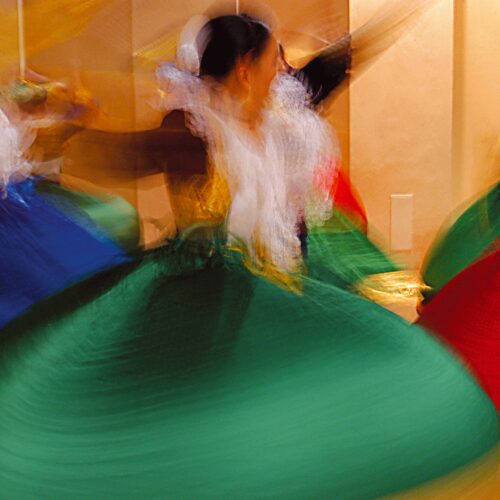
Born in 2005, the “Festival of the Little Arbëreshe Singers” is an idea of the Sportello Linguistico (Linguistic Desk) of the Municipality of Plataci, supported by the municipal administration. Arbëreshe culture is a heritage rooted in history, a legacy handed down orally and particularly through song, which continues to be central to all the community’s celebrations and is kept alive and developing thanks also to the children’s participation in this festival. Coming not only from Plataci but also from Frascineto, Dulcigno in Montenegro, Spezzano Albanese, Scutari in Albania and Santa Sofia d’Epiro, the young singers perform pieces in the Arbëreshe language, not very different from the classic songs of all children. We find songs dedicated to school and growing up, about dreams and candy, but also, and this is their specific strength, about their own experience of Arbëreshe society. Thus, we have titles such as “Per una amico platacese che ritorna” (For a Plataci friend coming home), “Noi italo-albanesi” (We Italo-Albanians) or even “La ragazza arbëreshe” (The Arbëreshe girl): the Arbëreshe from Italy and abroad, by participating in the Festival of the Little Singers, can compare notes with each other and create an ever-growing network among all the heirs of Skanderbeg. The commitment and professionalism of these children are truly exceptional, and they are supported by teachers and families who encourage them to express themselves in order to deeply move listeners, who will hardly forget the ancient words that the little ones sing for them.
Trebisacce: the balcony on the Alto Ionio region

The gardens, or “i vigne”, represent the green lung of Trebisacce, with an expanse of around 100 hectares located in the southernmost part of the town, a place where nature reveals itself in all its beauty and generosity. Even today, “i vignaruli” (the orange growers), as per tradition early in the morning, when the sun begins to reflect in the crystal-clear waters of the sea, begin their daily work of dedication and care of the precious fruit. Originally, the large fields were cultivated with vines (hence their name “i vigni”); it was only in 1880 that the vineyards were replaced by citrus groves. From that year onwards, a particular variety of orange, imported from Portugal, began to be produced locally, characterised by a late ripening compared to other varieties known in Italy: the “Biondo Tardivo” orange. The particular position and conformation of the Alto Ionio region, thanks to the mitigating action of the sea and the Pollino mountains, prevent the cold northern winds from blowing over the citrus groves, making the winter less harsh and allowing the oranges to develop during the winter months and be harvested in April. The Biondo Tardivo orange bears the PAT (Prodotto Agroalimentare Tradizionale – Traditional Food Product) mark and is one of Italy’s excellences.
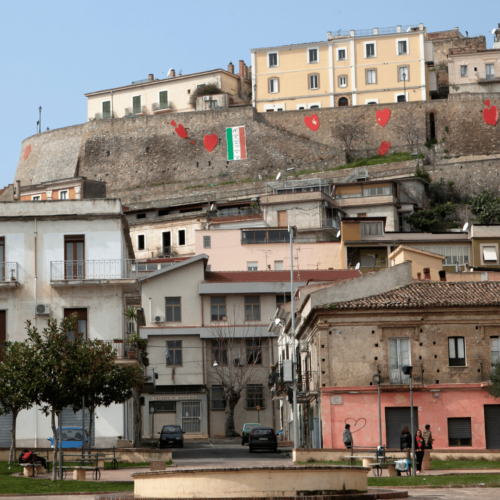
It is a fortification with high walls erected to defend the town from the invasions of Turks and Saracens, the protagonist of the historic battle fought in 1576 against the Turks. On the morning of the 21st of July, Turkish galleys arrived at Trebisacce to besiege the town, but its valiant and proud inhabitants resisted and, by throwing stones, pouring boiling oil and using poor means, managed to tame the enemy. On the 22nd of July, the mounted troops of Prince Berignano, who held the territorial jurisdiction at that time, came to their rescue, together with the troops sent from Cassano and Morano. The Turks were repulsed and suffered heavy losses, although thanks to the use of high ladders some managed to conquer the bastion and penetrate the village, kidnapping women and children to be resold as slaves at the Tripoli market.
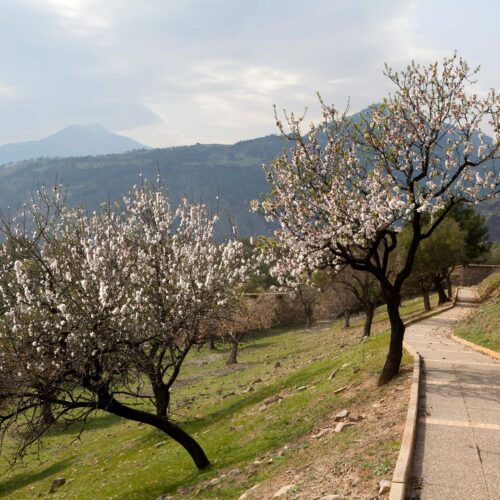
The Broglio area is a site of archaeological discoveries that have brought to light a settlement dating from the Bronze Age to the 8th century BC. From the plateau it is possible to admire a sensational landscape that sweeps from the Gulf of Corigliano to the Sibari Plain, from the Sila mountains to the Pollino massif. The settlement is one of the rare remains of the civilisation of the Oenotrians, a people who inhabited these shores of the Mediterranean Sea before the arrival of the Greeks. Here they built rectangular huts and warehouses in which ceramic vessels (doli) for agricultural produce and oil were stored. Evidence of this is provided by archaeological excavations that have unearthed ceramic vessels, bowls, cups, axes and hunting weapons. The settlement in Broglio lasted continuously until the end of the Early Iron Age (720 BC), which coincided with the foundation of Sibari.
Info and contact details:
parcoarcheologicodibroglio.it
Alessandria del Carretto: back to the mountains
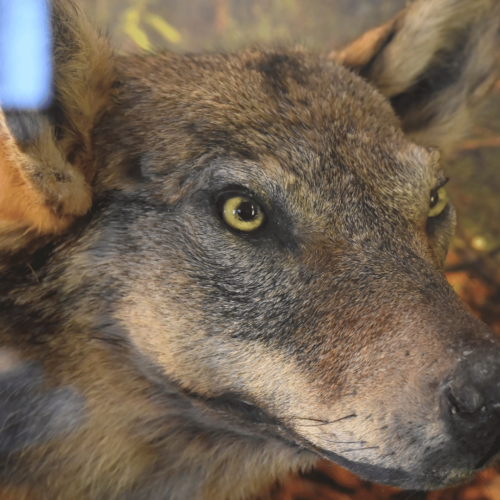
The idea of setting up the Museo Naturalistico del Lupo (Naturalistic Wolf Museum) arose following the tragic episode occurred on 14 August 1995, when a pack of wolves was massacred by breeders who were taking their cattle to pasture on the Mount Sparviere. The Pollino National Park, in collaboration with the Alessandria del Carretto administration, therefore set up the museum, located in the premises of the former primary school, to raise people’s awareness of the wolf’s habits and history and its relationship with man. The facility also hosts seminars, conferences and events on the subject.
Info and contact details:
Municipality of Alessandria del Carretto – www.comune.alessandriadelcarretto.cs.it
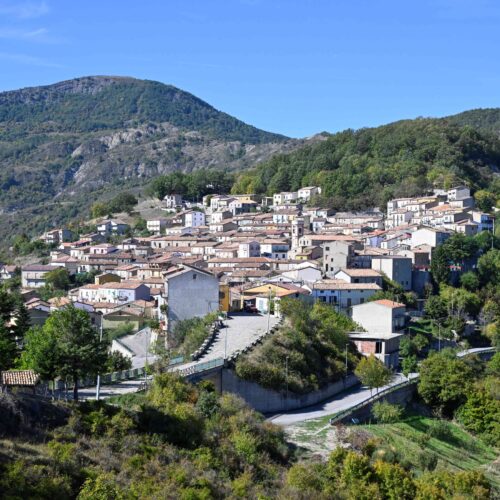
From the main square of Alessandria, we walk along the street following the signs for the hostel, then continuing along the dirt road that begins a few metres beyond the hostel and heads uphill towards the Alessandria countryside. The route continues along the ridge that divides the two watersheds of the canals which then join to form the Saraceno torrent. We continue uphill admiring splendid views and soon reach Croce Montillo, from where, continuing to the left, we come to the Timpone del Ladro (Thief Top). We proceed further to the junction with Spinazzeta, then keeping to the main road until the junction with the small track leading to the Acqua di Brume spring. At this point, we leave the dirt road and take the path heading towards the large silver firs on the ridge that leads to the Neviera and then to the summit of the Timpone, from where the view sweeps without limits: to the north, besides the Pollino peaks, we can see the Sirino Massif, the Latronico Alps and then the entire Lucanian Apennine chain. To the south, the panorama is no less impressive: in addition to all the Calabrian-Lucanian mountain ranges, there is the sea. Only a few places can boast this combination.
Descending along the western ridge of the Timpone, we again come to the dirt road that leads towards Serra di Lagoforano and Piano Cistone. Taking a small track to the west, slightly uphill, we arrive at Tacca Peppini. From here, we continue slightly downhill for just over a kilometre and arrive at the plateau where a small lake of glacial origin forms in spring.
From there, following the red and white markers, in just over an hour’s walk, we reach the summit of the Mount Sparviere, an excellent panoramic balcony over the entire Sibari Plain and its gulf. Instead, looking inland, the numerous “timpe” (hilltops) look like a rock mass that sinks into the Raganello Valley to give rise to one of the most important canyons in Europe. (Signposts: trail sign no. 947; Time required: 4.55 hours one way – 3.50 hours to return; Difficulty: E – Excursion).
Info and contact details:
www.caicastrovillari.it

The museum houses the bequests of scientist Guido Chidichimo (1912 – 1998) to his home town. Born in Alessandria del Carretto, doctor Chidichimo had a dazzling medical career and, upon his death, left the entire contents of his private practice in Rome to the Alessandria municipal administration, which acquired a worthy home for the purpose. In it, it is possible to observe the many medical instruments of the period, a large collection of statues and works of art, and an impressive antique world map with notes on the constellations. The adjacent Cardiac Surgery Library preserves an invaluable cultural and scientific heritage, which illustrates the evolution of around a century of medical science through direct testimony, books, videos and slides.
Info and contact details:
Municipality of Alessandria del Carretto – www.comune.alessandriadelcarretto.cs.it
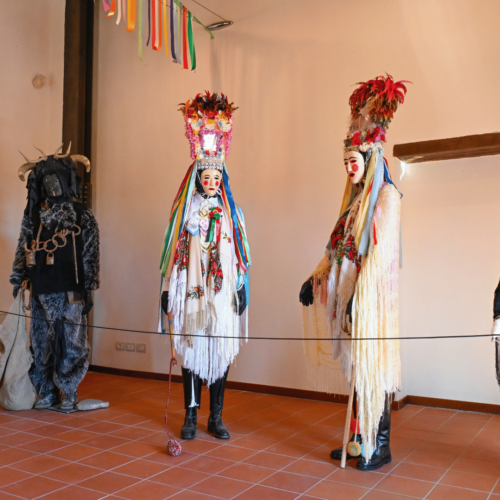
The museum was created to house the history, stories, folklore and testimonies of the most important and ancient traditional carnivals in Italy, with a special focus on the Alexandrian carnival and its characteristic masks. It is housed in Palazzo Chidichimo where the main Italian anthropological carnival masks are displayed in a multimedia room.
Info and contact details:
www.museoalessandrinodellemaschere.it


